
Video: Liz Shepherd
Hello friends!
As a printmaker and a sculptor, Liz Shepherd has spent decades exploring image, process, and materials. Recently, she has turned her attention to kiln-fired stained glass, bringing the same thoughtful experimentation and technical rigor to an entirely new medium. In this issue, Liz shares her process with us, offering an introduction to the tools, techniques, and discoveries that have shaped this exciting new direction in her practice. She also has an upcoming workshop at Shepherd & Maudsleigh Studio in September, Silkscreen and Stained Glass, should you wish to explore in more detail in person.
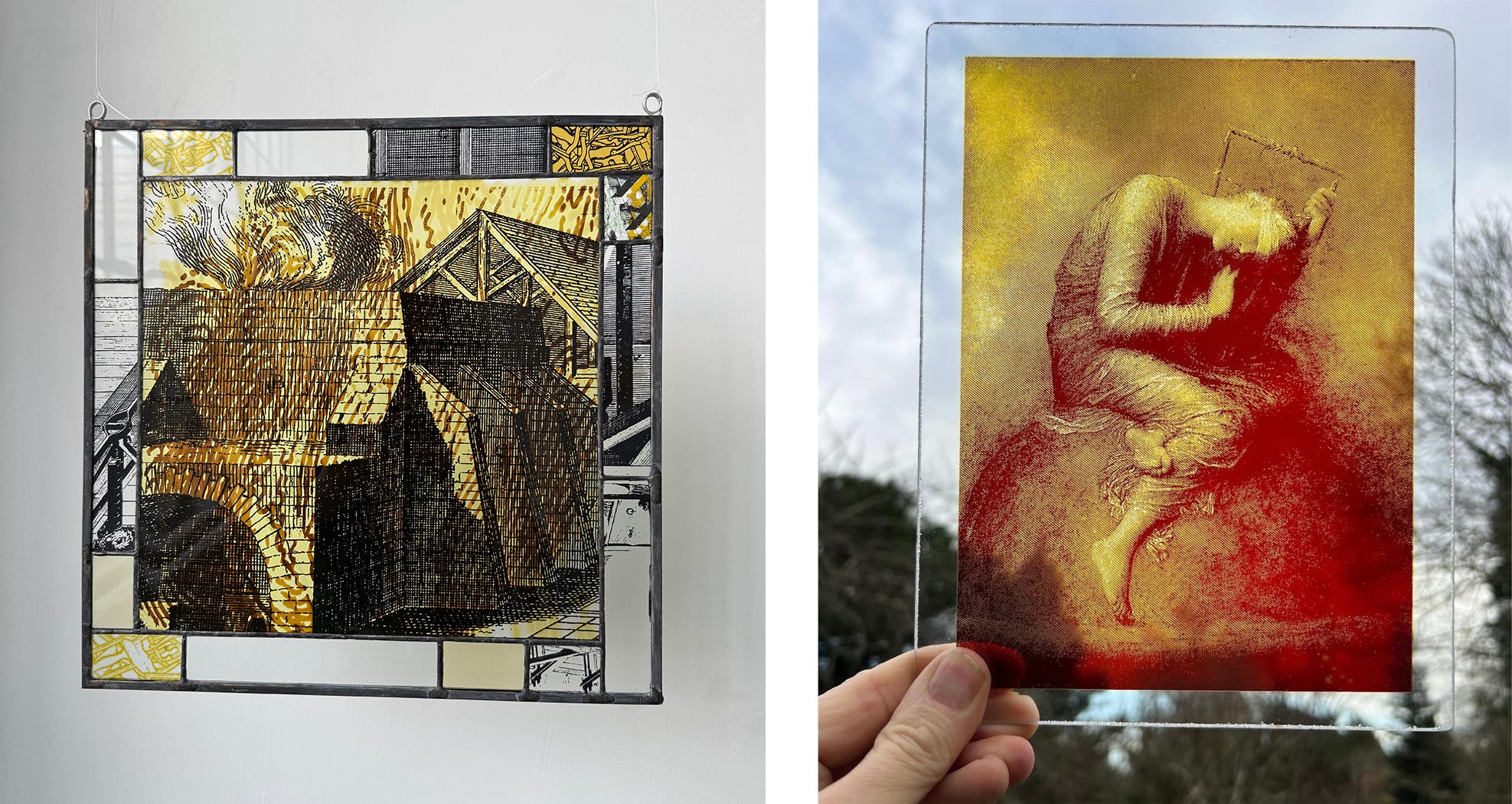
Work by Liz Shepherd left and James Cockerill right
Leah: Hi Liz, why glass? How did you come to printing on glass?
Liz: I saw the work that James Cockerill was doing and I immediately had to try it. I hoped that since I am an experienced silkscreen artist that it might not be too difficult to add printing on glass to my skills.
Leah: Physically and conceptually what does it add to your work? Any big surprises in your process?
Liz: I could go on and on here but briefly, the transparency of glass is alluring, seductive. I fell in love with it when I first saw the windows at Chartres Cathedral at the age of 13. Who wouldn’t?
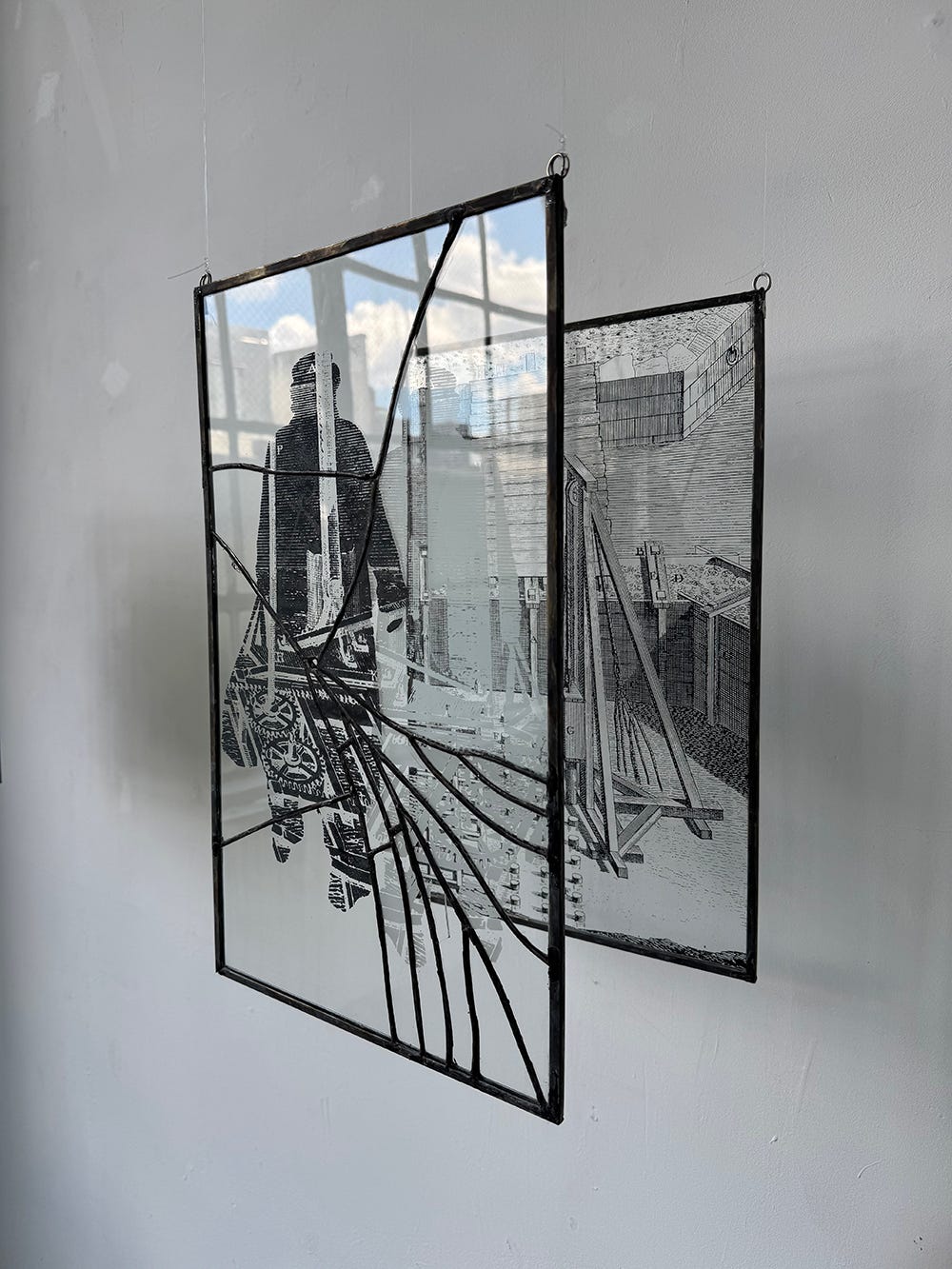
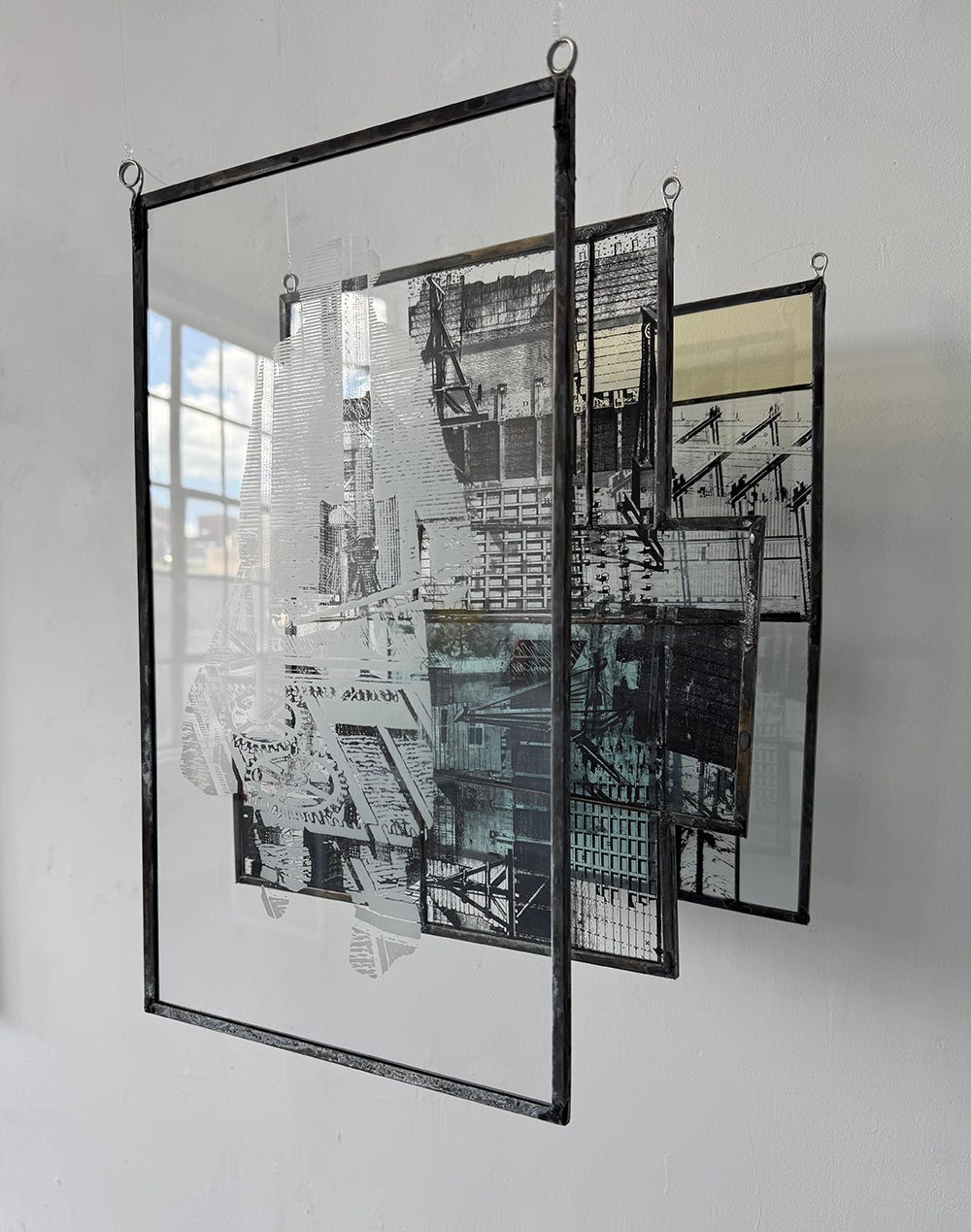
Conceptually, it is engaging to me as a printmaker. Printmakers (nearly) always work in layers. Glass invites you to separate the printed layers by printing on clear glass. So, you are not just seeing through layers as you do on paper. You are actually seeing through the layers even when you print on one piece of glass.
Leah: Is setting up a screen for glass basically the same as for paper, or do you have to change anything about how you prepare it?
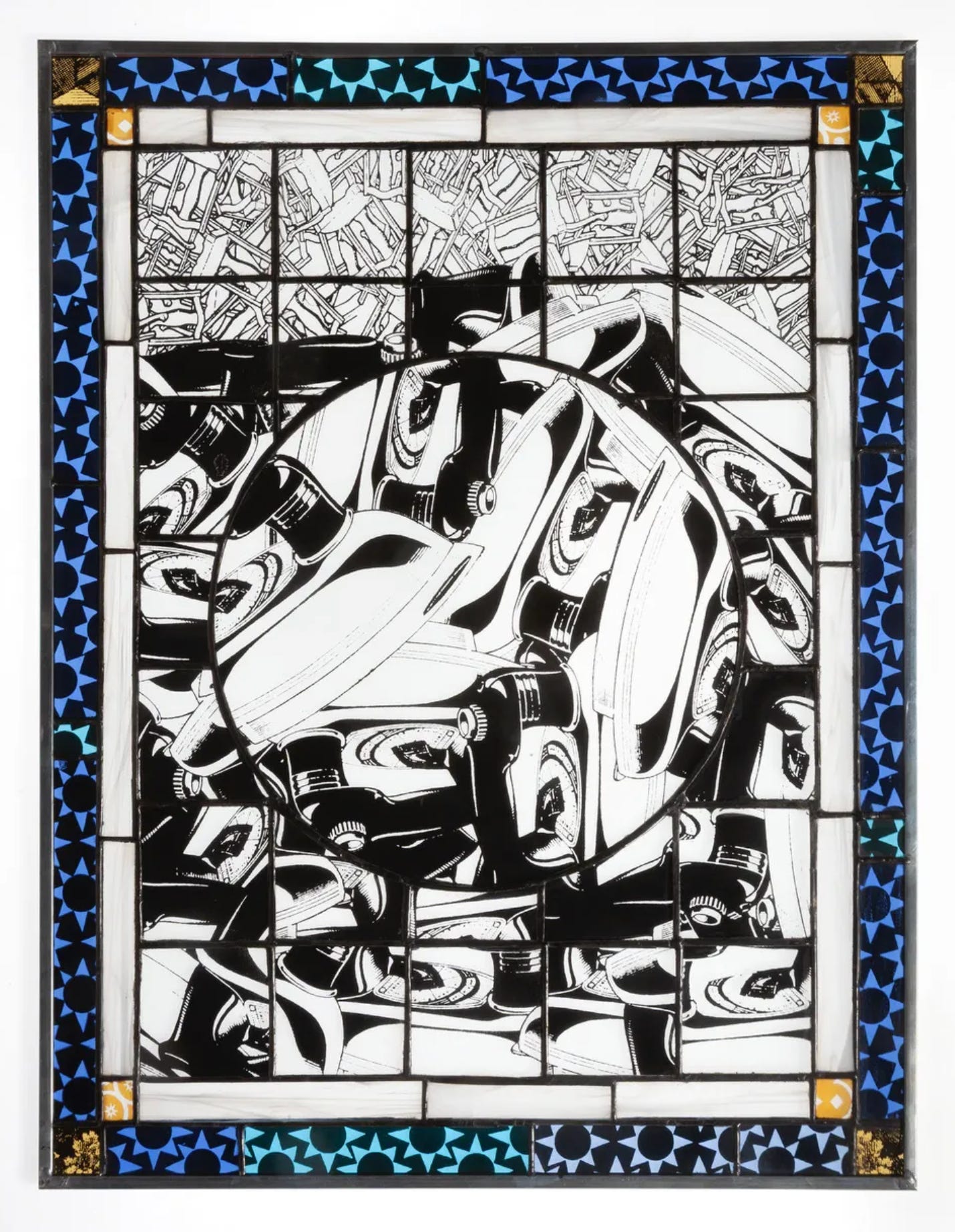
Liz: You have to change a lot of little things. You use a variety of different inks/paints: some are transparent enamels, some are opaque “grisaille”. You can also use silver and copper stains which are gorgeous. There are small, but important method adjustments to setting up to print.
Leah: Does the design take longer to burn into the screen when you know it’s headed for glass instead of paper?
Liz: No, the screen is the same, basically. A coarser mesh is a good idea, however.
Leah: What’s actually different about the ink you use for glass? Does it look or feel different in the container than regular printing ink?
Liz: It is entirely different. We get the pigments in a powdered form and mix, by mulling, in a silkscreen medium. The ink is composed from varying degrees of ground metals and glass.
Leah: Does it dry differently sitting on the screen faster, slower, thicker?
Liz: It is much thinner ink but takes a comparatively long time to dry. A big advantage is that it doesn’t dry up in the screen while you are working. That means, unlike printing on paper, you can take your time! But we have to thoroughly dry each printed layer on the glass with a hairdryer. That takes a little time but it is a small price to pay. It dries pretty quickly with the dryer.
Leah: Is cleanup afterward any different?
Liz: Yes! It is so fast and easy. I am loving that. I pretty much just wipe my screen with a wet sponge. I also love that if you goof when you are printing you can scoop the ink off the glass and re-use not only the ink, but of course the glass, too. Can’t do that with paper.
Leah: Does printing onto glass feel different in your hands than printing onto paper? More resistance, less resistance?
Liz: No resistance. Very simple and I don’t “flood” the screen when I am printing in one color, which makes the whole process fast and easy.
Leah: Paper has a bit of texture that grabs ink. Glass is smooth and slippery, does that change how the ink sits down on the first pass?
Liz: No, it is oddly counter intuitive. The ink sits on the glass, no problem.
Leah: Is it harder or easier to line things up on glass versus paper, since glass doesn’t shift or stretch the way paper can?
Liz: It is much easier for that reason, no stretching because it doesn’t go through a press.
Leah: With paper you’re often waiting for one layer to dry before printing the next. Is that timing different with glass?
Liz: Yes, when you print on paper the ink dries almost immediately. Not so with glass, you have to slow down for a good 10 minutes.
Leah: Does the order you print your colors in matter more or less on glass?
Liz: I think it matters quite a bit with both methods. It might be a little more complex on glass due to the firing, but in a good way! There can be an interaction between enamels and stains. Sometimes results can be unpredictable. Printmakers love that.
Silkscreen & Stained Glass with Liz Shepherd Workshop
4 days: Wednesdays
September 23 d& 30th, October 7th & 14th,
10AM to 4PM