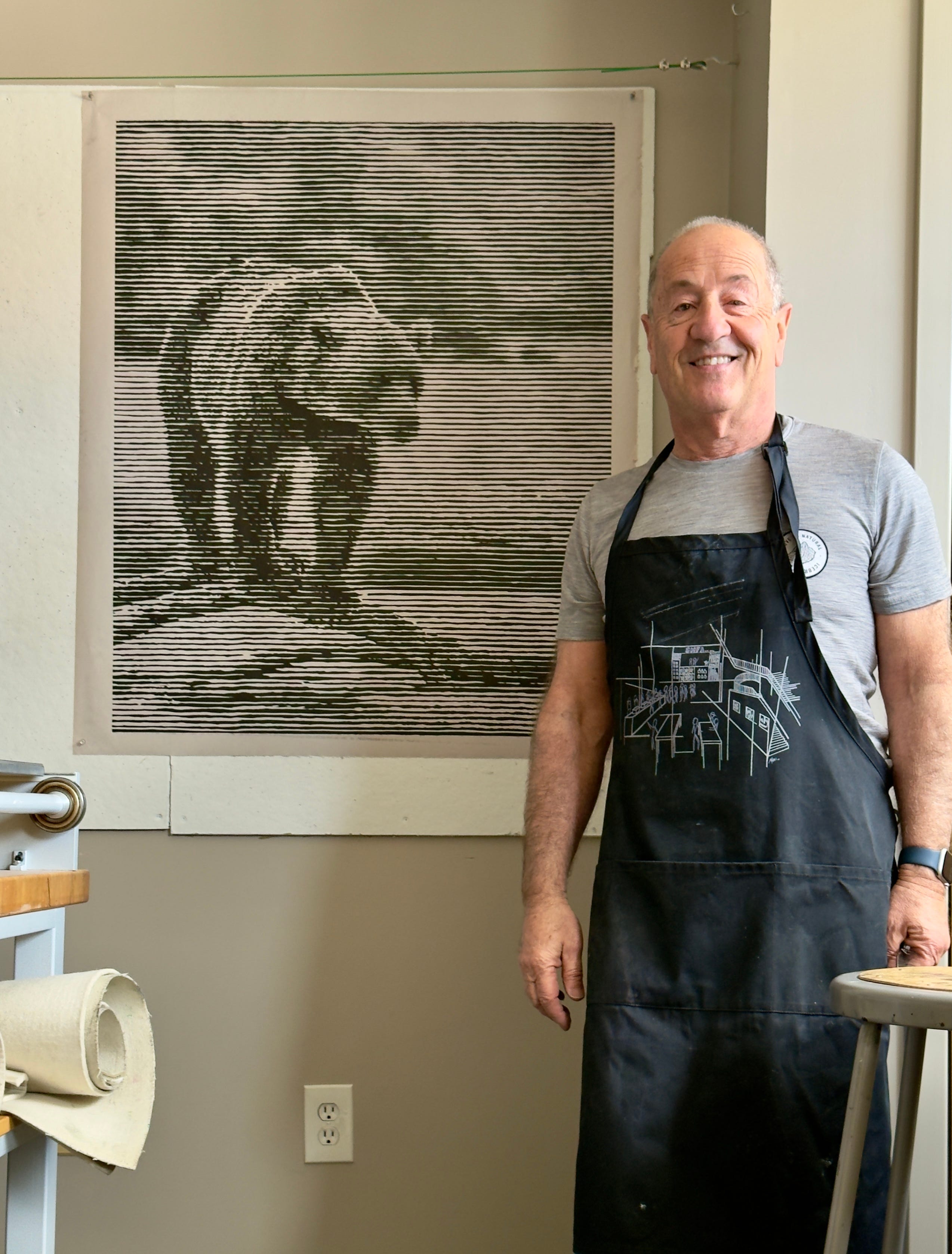
Ralph Robinson next to his print
Hello friends!
Welcome to our seventh issue of the Print + Book Report featuring an interview with Ralph Robinson. Ralph’s work begins with looking. A photographer and printmaker living in Cambridge, Massachusetts, Robinson received his MFA from the School of the Museum of Fine Arts at Tufts, and has traveled with his camera to remote wilderness areas around the world. His encounters have included brown bears in Siberia, polar bears in the Arctic, penguins in Antarctica, and landscapes whose scale, beauty, and vulnerability have inspired both reverence and a growing sense of urgency about their preservation. Returning with thousands of photographs, Robinson increasingly treats the photographic image as a beginning rather than an endpoint. Through photogravure, woodblock, screenprinting, chine collé, inkjet, and mixed-media processes, he brings these encounters into physical form, slowing the image down and making it something layered, tactile, and made by hand.
That process of slowing down mirrors a larger concern in Robinson’s work: attention. His experiences in vulnerable landscapes have led him to think less about wilderness as something distant from human life and more about our continuity with the natural world. His work asks what might happen when we truly attend to a place or another living being, and whether wonder and connection can become forms of care. While Robinson is clear-eyed about what has already been lost and the urgency of the climate crisis, his work remains rooted in hope. Rather than telling viewers what to think, he creates images that invite us to pause, look closely, and consider our own relationship to the natural world and our responsibility within it.
At Shepherd & Maudsleigh Studio, where Robinson has helped develop the studio’s photogravure practice and teaches the process to others, that spirit of inquiry extends into making itself. He approaches printmaking not as a recipe for reproducing a photograph, but as an ongoing process of testing, looking, adjusting, and learning. In our conversation, we talk about what happens when photography becomes print, the enduring magic of photogravure, encounters with wildlife and wilderness, teaching within a community of printmakers, and how traveling to some of the planet’s most extraordinary places can ultimately teach us to pay closer attention to what is right outside our own windows.
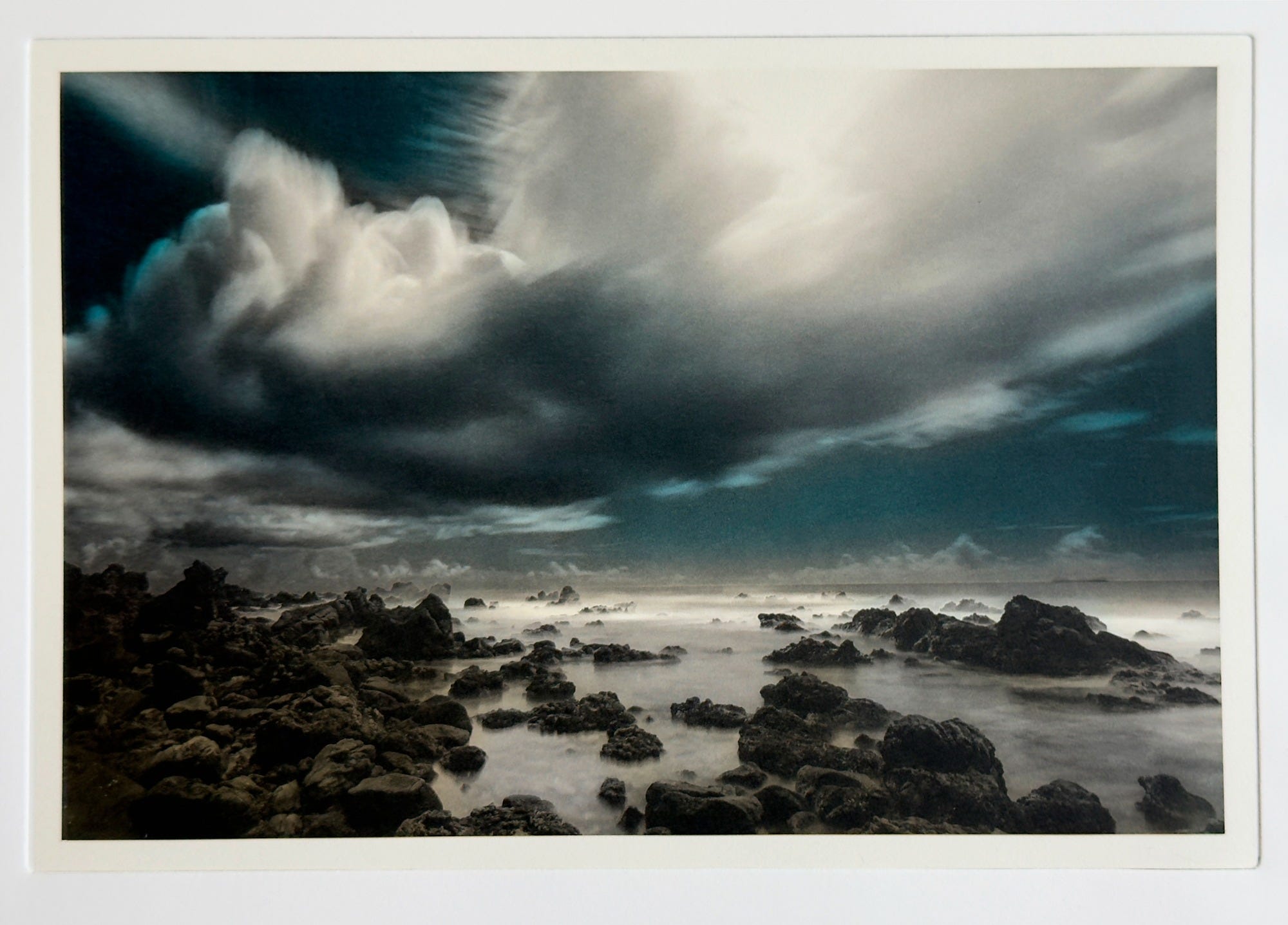
Against the Pacific, Photogravure with chine collé, 9”x13”
Leah: Your practice begins with photography, often made during expeditions to remote wilderness areas, but increasingly those images become prints. What drew you from the photographic image into printmaking, and what does the physical process of making a print allow you to do that photography alone does not?
Ralph: Photography is still the beginning of almost everything I do. Being physically present in a place, paying attention, waiting, and responding with my camera remains fundamental. But over time I began to want something more from certain photographs. I wanted to slow them down and add more of myself to them.
A photograph may be made in a fraction of a second, even when the planning and experience surrounding it unfold over hours or days. Printmaking brings time and physicality back into the work. Preparing the image, making the plate or block, inking, wiping, choosing paper, printing, adjusting, all serve to energize the image and make it more physical.
Translating a photograph into another medium also creates useful distance from the original experience. Instead of asking only, “What did this place look like?” I can ask, “What did it feel like? What matters in this image? What makes it interesting?”
Photogravure gives me extraordinary tonal depth and detail, while chine collé, woodblock, screenprinting and other techniques let me introduce color, atmosphere and abstraction. The photograph remains embedded in the work, but it is a starting point rather than an endpoint.
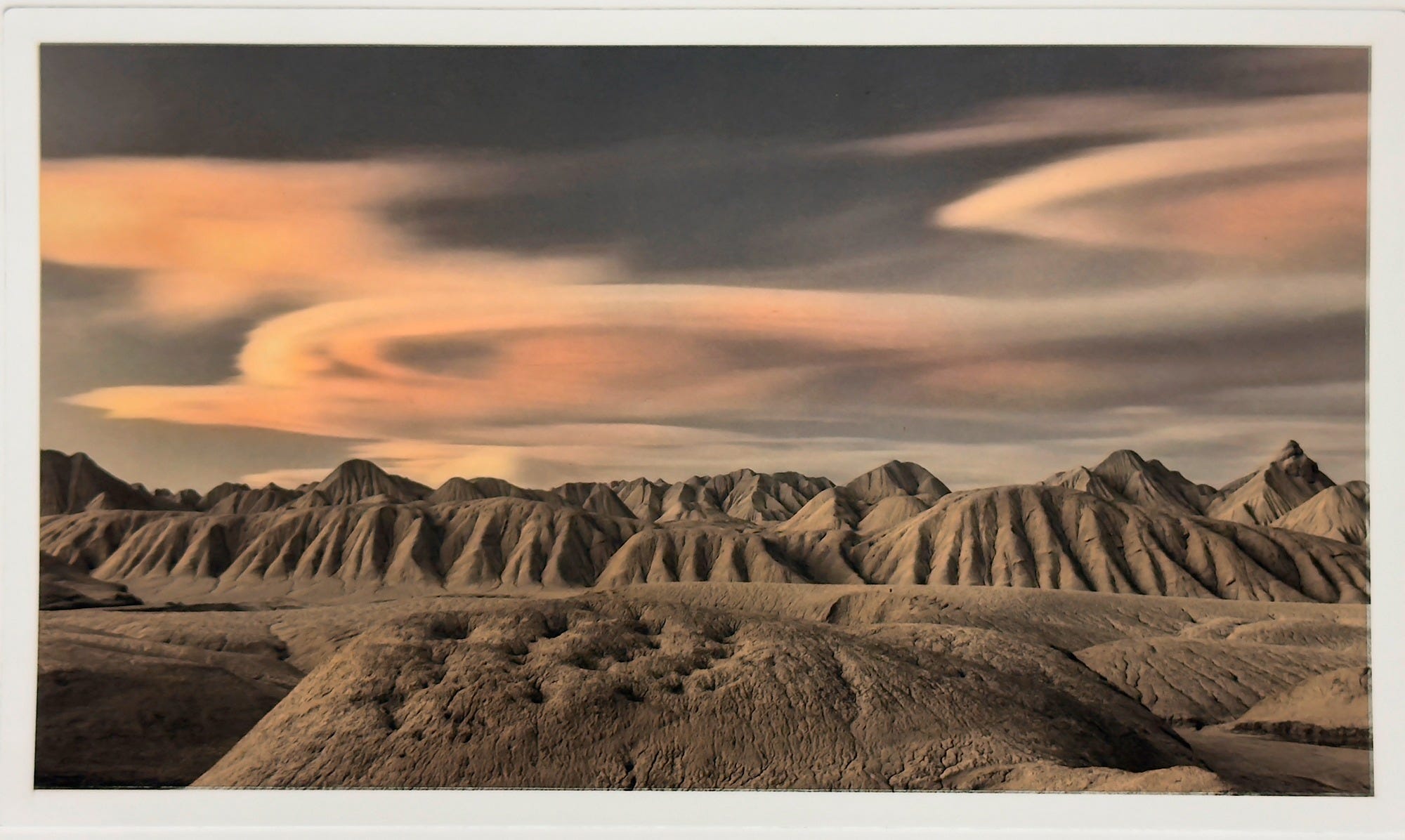
The Long Work of Wind, Photogravure with chine collé, 7”x13”
Leah: You’ve photographed places and wildlife that many of us may never encounter firsthand, from the Arctic and Antarctica to other remote wilderness areas. How has being physically present in these environments changed the way you think about wilderness, conservation, and your role as an artist?
Ralph: The more time I spend in remote places, the less I think of wilderness as something “out there,” separate from us. I have developed a much stronger sense that humans are continuous with nature, not apart from it. Being in places where weather, animals, geology and sheer physical scale dominate the experience can dismantle that illusion quickly.
Close encounters with wildlife reinforce this. When you spend time watching an animal rather than simply photographing it, individuality emerges: curiosity, caution, resilience, vulnerability. The animal stops being an example of a species and becomes a living presence.
At the same time, many of these places are visibly vulnerable. In the Arctic especially, ecological change is difficult to regard as an abstraction. It is right there in front of us.
I don’t see my role as telling people what to think. I am more interested in creating conditions for attention. If an image allows someone to pause long enough to feel wonder, awe or connection toward a place or animal they may never encounter, perhaps care follows. We tend to value what we feel connected to, and protect what we have learned to value.
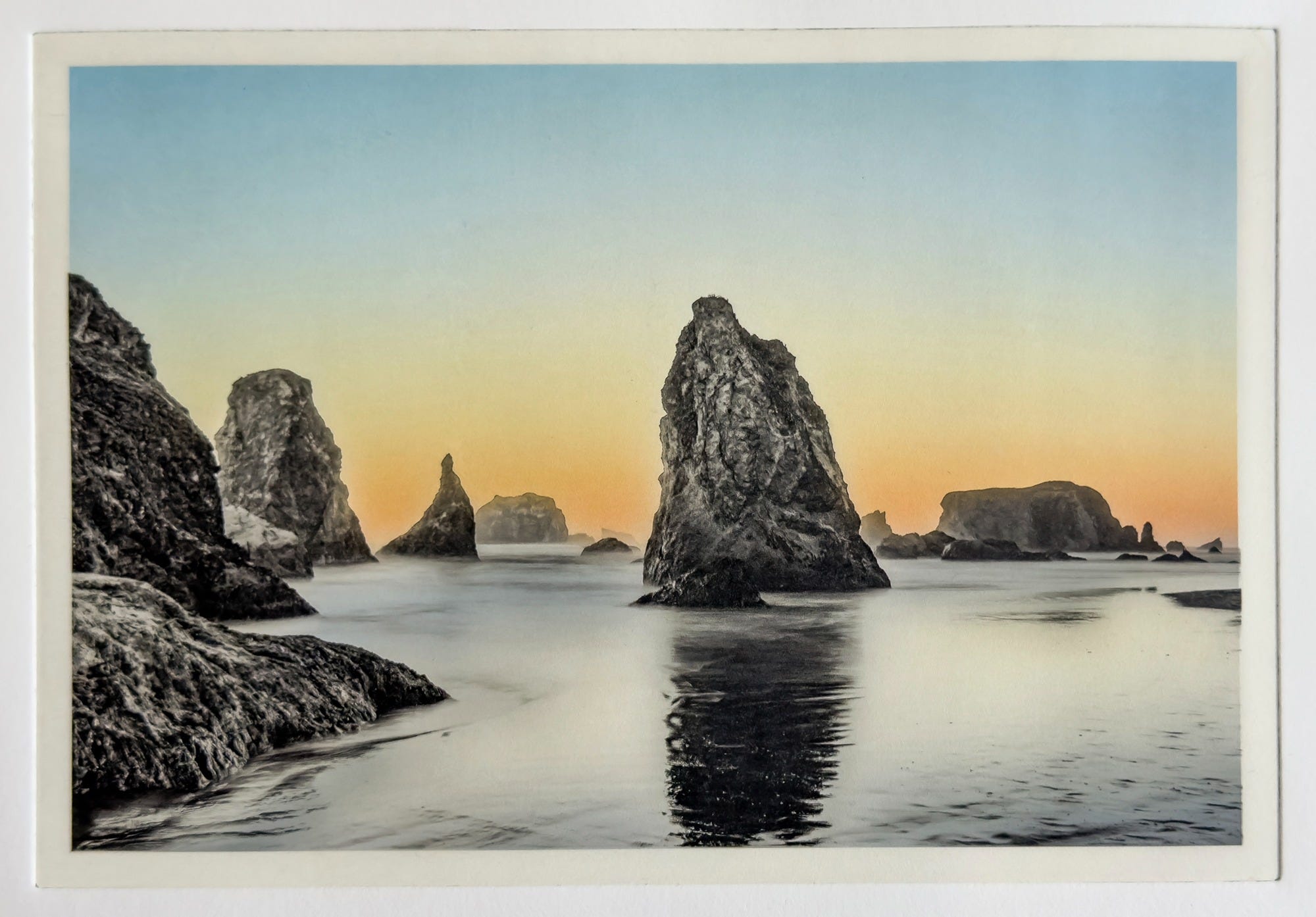
Waters Edge at Bandon Beach, Photogravure with chine collé, 8”x12”
Leah: Climate change and the preservation of remaining wilderness are central concerns in your work. How do you make work about environmental urgency without allowing the message to overwhelm the image, or the beauty of the image to obscure what is at stake?
Ralph: I think about that balance a great deal. I avoid making work in which the message arrives before the viewer has even taken in the image. I would rather begin with beauty, mystery, vulnerability or ambiguity and allow larger questions to emerge.
But beauty can also become problematic if wilderness is presented only as spectacle. A beautiful iceberg, Arctic fox or astro-landscape can easily become just another beautiful object. I want the work to contain something more: presence, fragility, uncertainty, the passage of time.
The strongest images often hold more than one thing at once. Beauty can coexist with loss, resilience with vulnerability. Printmaking helps me explore those tensions by moving the image beyond the purely photographic.
Sometimes quietness can say more. Environmental urgency is enormous, but I don’t need to illustrate that enormity in every image. A sustained encounter with a single animal, tree, coastline or iceberg may be enough.
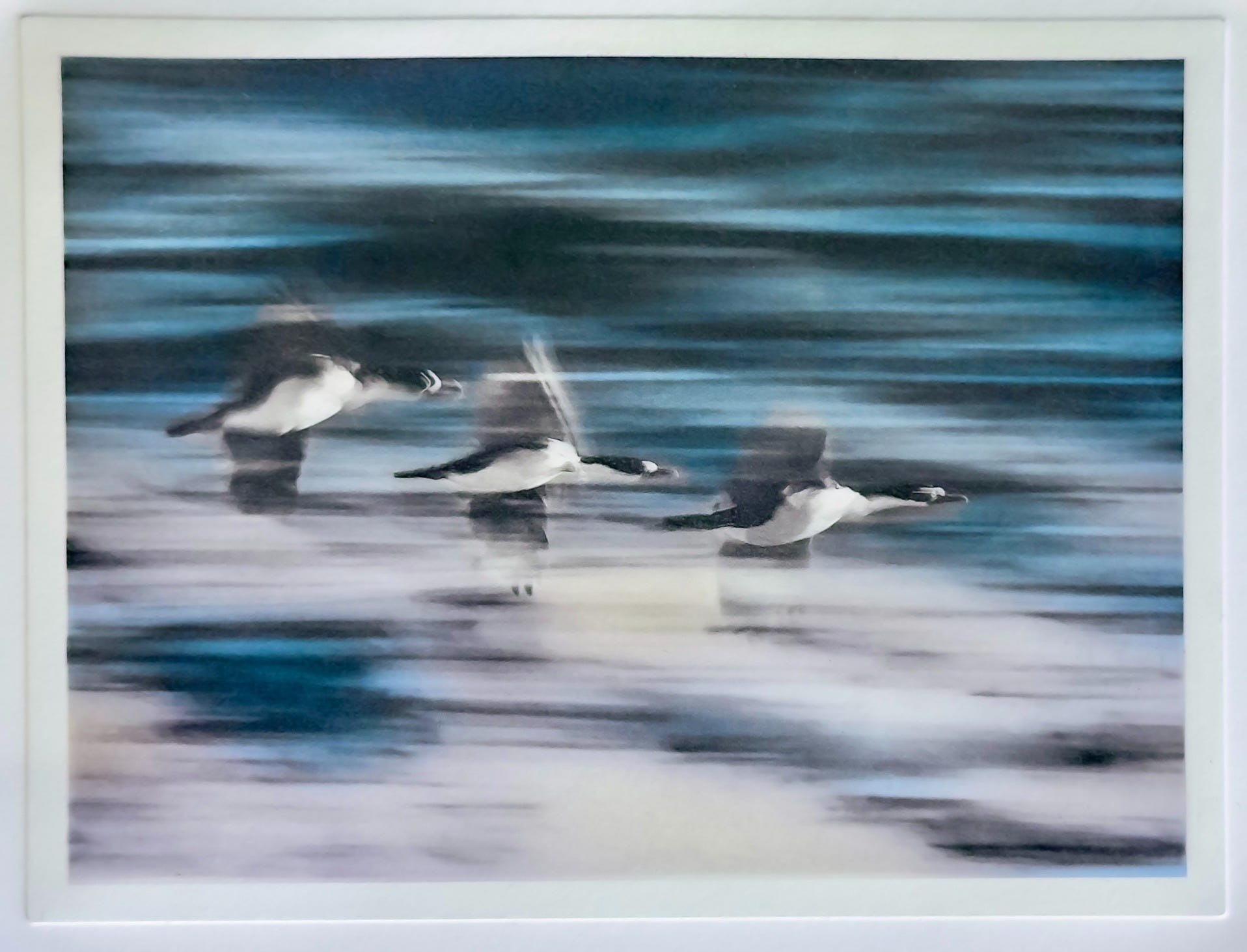
Flight Line, Photogravure with chine collé, 6”x9”
Leah: You work across photogravure, woodblock, screenprint, inkjet, and mixed media. How do you decide which process is right for a particular image? Are there qualities in an image that suggest one form of printmaking over another?
Ralph: It starts when I make the original photograph. I am really trying to do one thing: find something interesting to look at.
When I begin thinking about transforming it, I let the image lead. Some photographs immediately suggest photogravure because of their tonal range, detail or atmosphere. It is especially well suited to images that can live in monochrome, in the tradition of Steichen, Stieglitz, Curtis and Strand. Jon Cone taught me how to translate my own images into photogravure using contemporary materials.
Other images resist monochrome completely. Sometimes color is too essential to remove. That has led me toward mixed media, including inkjet beneath the photo-etching and chine collé with thin Japanese papers.
Woodblock forces simplification. Detail gives way to shape, gesture and rhythm. Screenprinting can push an image toward flat color, layering or graphic structure. Sometimes I combine processes because no single one can quite do what I want.
The process should serve the image, not the other way around. I do not want my printmaking to become the proverbial hammer in search of a nail.
Printing at Shepherd & Maudsleigh Studio
Leah: Photogravure sits at an interesting intersection between photography and the physical traditions of intaglio printing. Can you describe what Photogravure is? What is it about the process that captures your attention, and what have you learned from spending so much time with it?
Ralph: Photogravure is an intaglio process that allows a photographic image to be printed with ink from a plate rather than through darkroom or digital photographic printing. The process goes back 150 years. Traditionally it was etched into copper with acid; today, photopolymer plates that wash out in water make the process safer and more accessible while retaining extraordinary fidelity.
At Shepherd & Maudsleigh, we transfer the photographic image directly to a photopolymer plate using a modified inkjet printer. Once exposed and processed, the plate holds the tonal information of the photograph in microscopic recessed areas. It is inked, wiped, covered with dampened paper and run through an etching press.
Peeling the paper from the plate and seeing the image appear is still a wonderful moment. I enjoy it every time, and especially enjoy watching students experience it. Our plate-making process is now very well calibrated, but printing still allows enormous creative exploration. Small differences in the ink mix, the wiping, the choice of paper, the amount of press pressure can affect the result. The troubleshooting and problem solving are part of the inquiry.
Photogravure has taught me patience and made me more attentive to tonal relationships, materials and process. Most importantly, it has changed how I see photography. Sometimes, back in the field, I find myself imagining the print as I press the shutter.
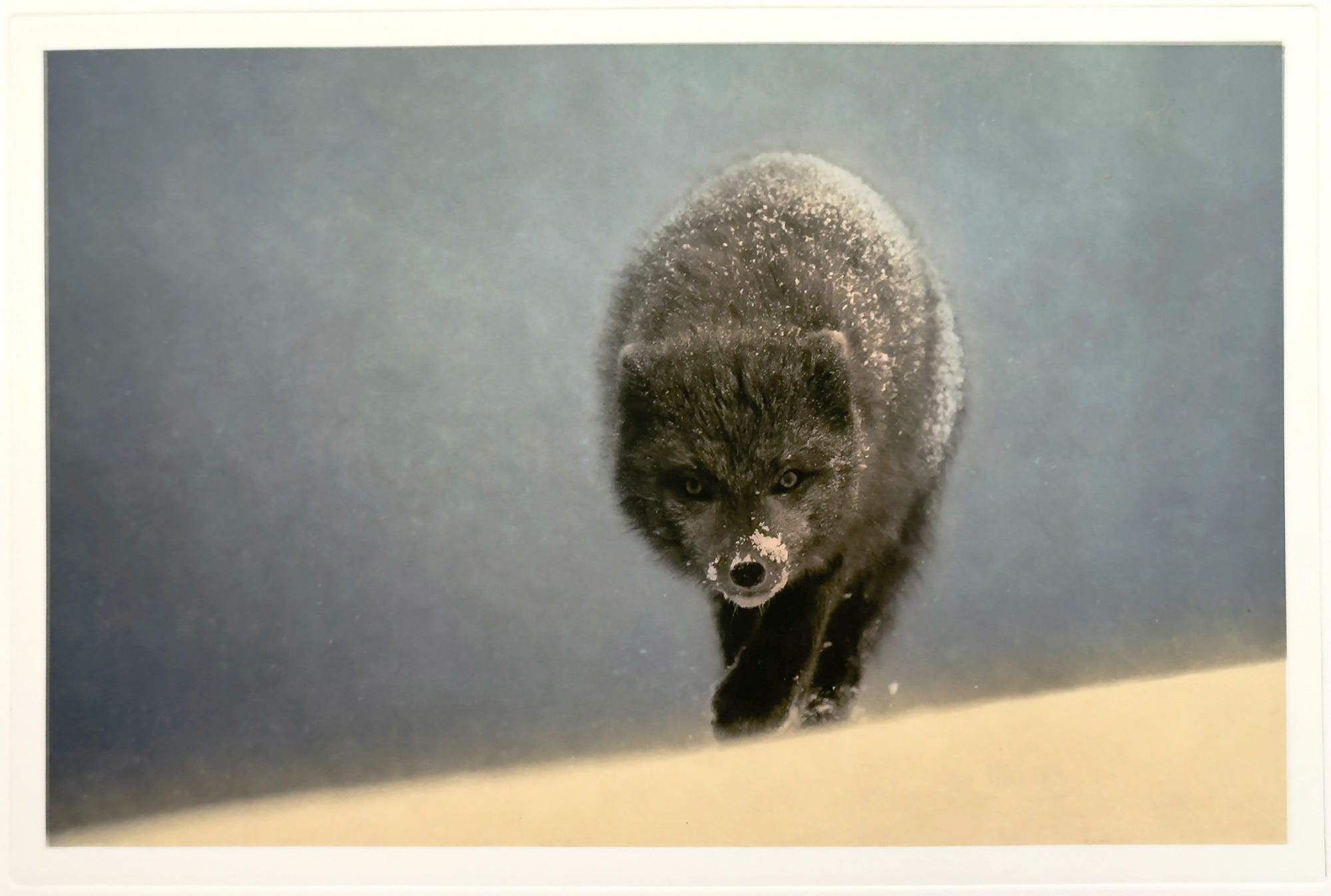
Weathered, Photogravure with chine collé, 9” x 13”
Leah: You’ve played an important role in developing the photogravure practice at Shepherd & Maudsleigh Studio, where you also teach. What are some of the foundational things you try to pass on to someone encountering the process for the first time? And what have you learned through the sharing, testing, and building of knowledge within a community of printmakers?
Ralph: One of the things I try to communicate is that photogravure is a process, not a recipe. It is a transformation, not a reproduction.
There are fundamentals to learn: preparing the image, making and evaluating the plate, inking, wiping and printing consistently. But I especially want students to learn how to diagnose what they see. If a print is too dark, too flat, muddy in the shadows or weak in the highlights, where did the problem enter the process? What should change next? Learning to “read” a print is more valuable than memorizing instructions.
I encourage students to change one thing at a time. If you alter the ink, wiping, paper moisture and press pressure simultaneously, it becomes difficult to learn from the result. A methodical approach turns mistakes into information. I am nothing if not systematic, although I try to keep that from getting in the way of creativity.
Teaching strengthens my own investigative approach, which is one reason I want to keep teaching. Students encounter problems I haven’t seen and ask questions that force me to examine my assumptions. That is one of the great strengths of the Shepherd & Maudsleigh community. Knowledge grows through sharing, testing and comparing results. Printmaking has always depended on knowledge passing from one person to another, and I like being part of that continuum.
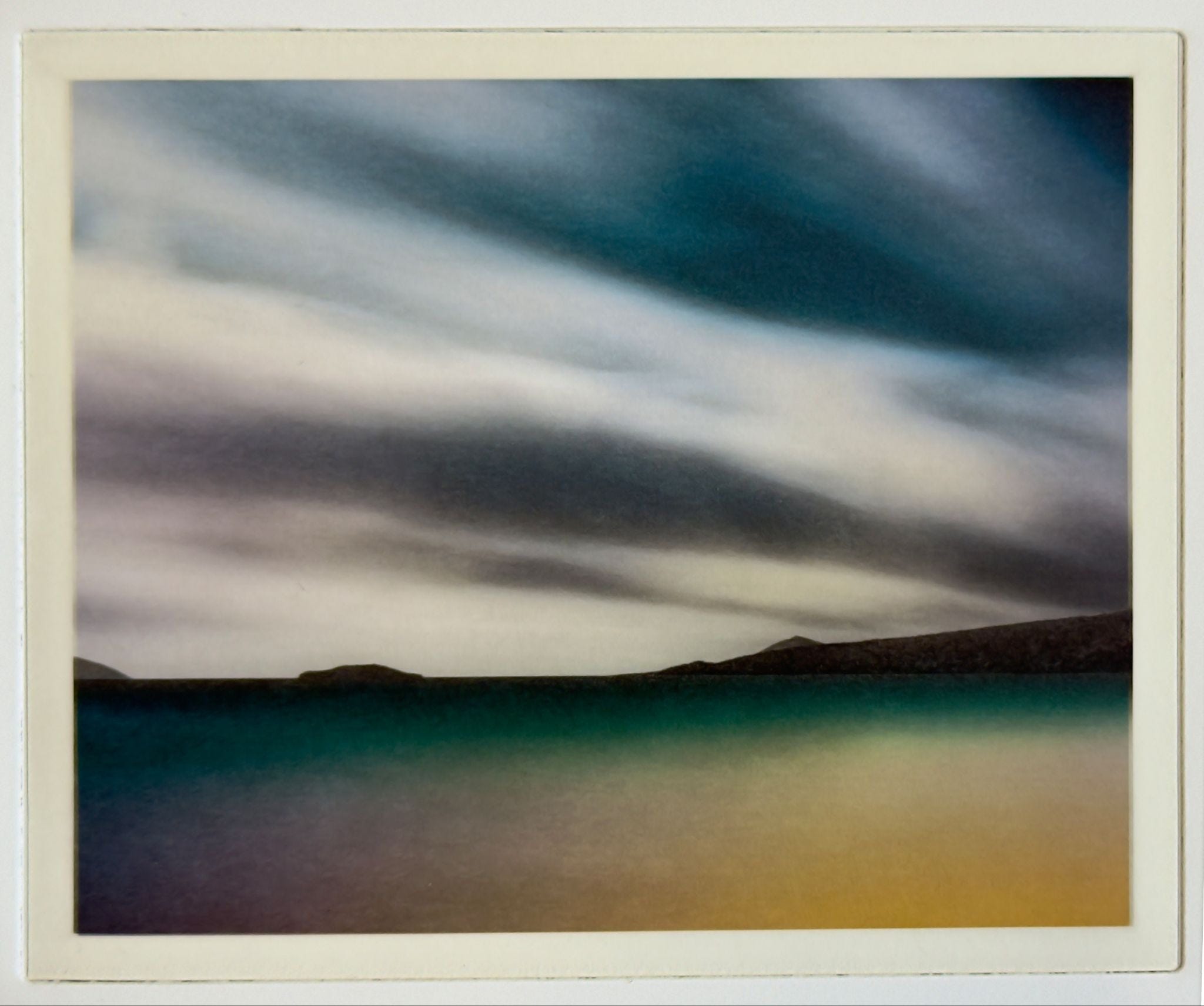
Galapagos Dream, Photogravure with chine collé, 7” x 8 1/2”
Leah: Much of your work asks viewers to care about places and animals they may never encounter themselves. What do you think images can do to create that sense of connection? Can art change how we value or protect a place we may never see firsthand?
Ralph: I believe it can. Most of us care about places we may never visit and animals we will never encounter. Our understanding of them comes through stories, photographs, books, films and art. Images can make something distant feel less abstract. I have no urge to climb Everest, but I like knowing it is still there for those who do.
For me, the most powerful wildlife images are often not the most spectacular. They are the ones that allow us to recognize something in another creature: attentiveness, vulnerability, tenderness, curiosity, protectiveness, affection. There is some anthropomorphism in that, and I am completely comfortable with it.
The same can happen with landscape. A place stops being a name on a map and becomes specific: wind shaping a surface, the scale of an ice field, the texture of a forest, water moving over stone.
I don’t expect a single artwork to change someone’s behavior or opinions. But art can change the quality of attention we give something. Once we see something as particular, alive and connected to us, indifference becomes more difficult.
That is why I return so often to awe, and to wonder. Wonder encourages curiosity, curiosity encourages attention, and sustained attention can become care.
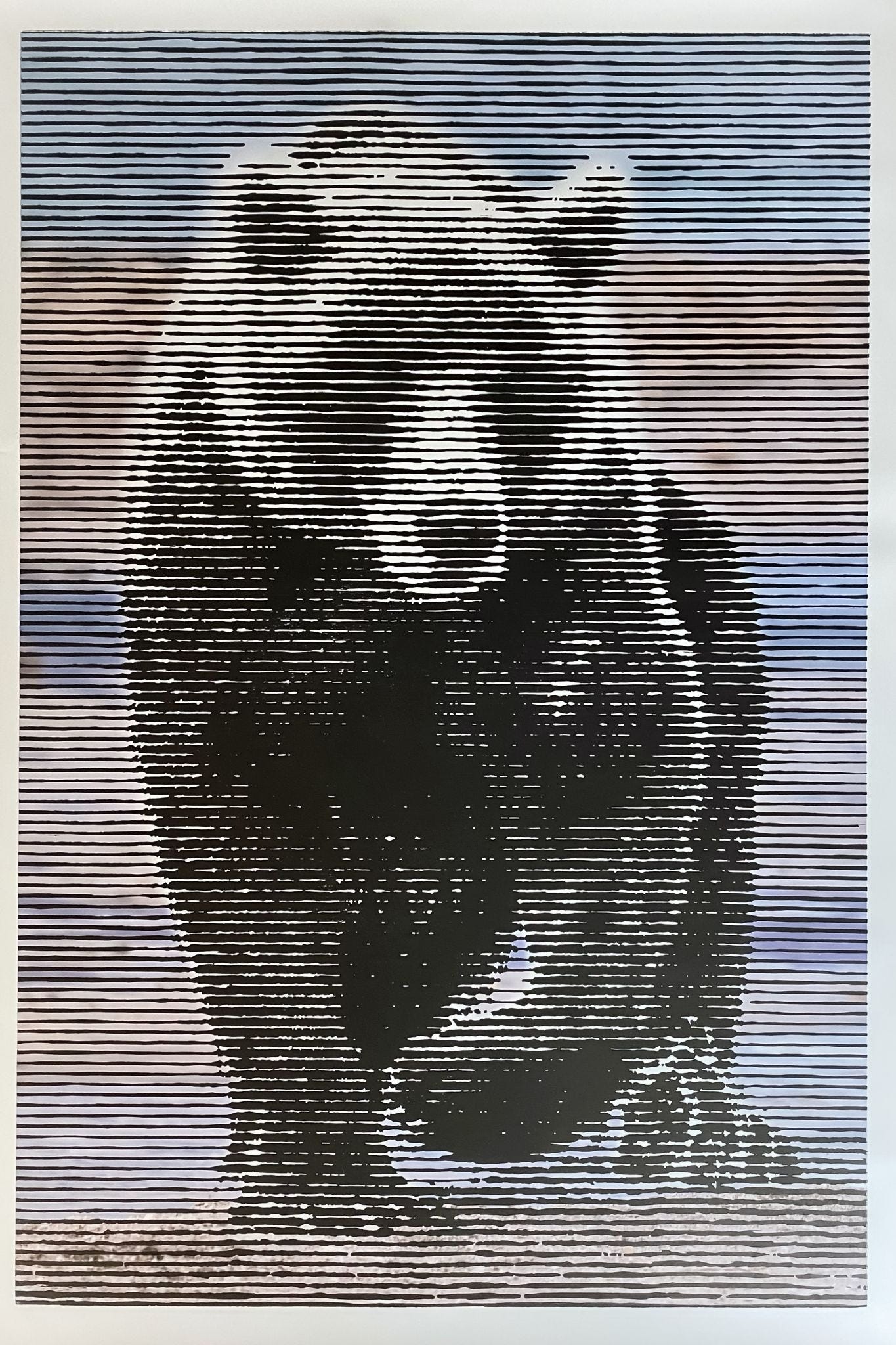
Emerging, Woodcut over inkjet, 40” x 60”
Leah: After traveling to and photographing some of the planet’s most extraordinary and vulnerable environments, has making this work taught you anything about paying attention closer to home? Has it changed the way you see and live in the ordinary landscape around you at all?
Ralph: I very much hope so, although it is something I am continually working on. Remote places can seduce you into believing the extraordinary exists somewhere else. You travel thousands of miles to see an Arctic landscape, a penguin colony, a bear or an eclipse, and those experiences understandably feel enormous, and make us feel more alive.
After the trip is over, the habit of attention can travel home with you, but you have to remember to unpack it! Photography and printmaking both encourage that attention. They ask you to look long enough for the familiar to become unfamiliar again. In Zen, this is sometimes called “Beginner’s Mind”: seeing without the overlay of habit or identity.
I do notice weather, changing light, seasonal transitions, trees, birds and water closely. Once you have spent hours watching an animal simply go about its life, it becomes more natural to find interest in a bird or a raccoon outside your window. Once you have watched ice, wind and water shape landscapes on a grand scale, you begin seeing those same processes everywhere.
I don’t think wilderness begins at some particular distance from a road or city. The same living systems continue through the places where we live. There is quite a lot of wildlife here in Cambridge, even in our backyard. The extraordinary journeys still matter enormously to me, but increasingly they reinforce a simpler idea: connection to the natural world does not require going somewhere remote. It requires paying attention.
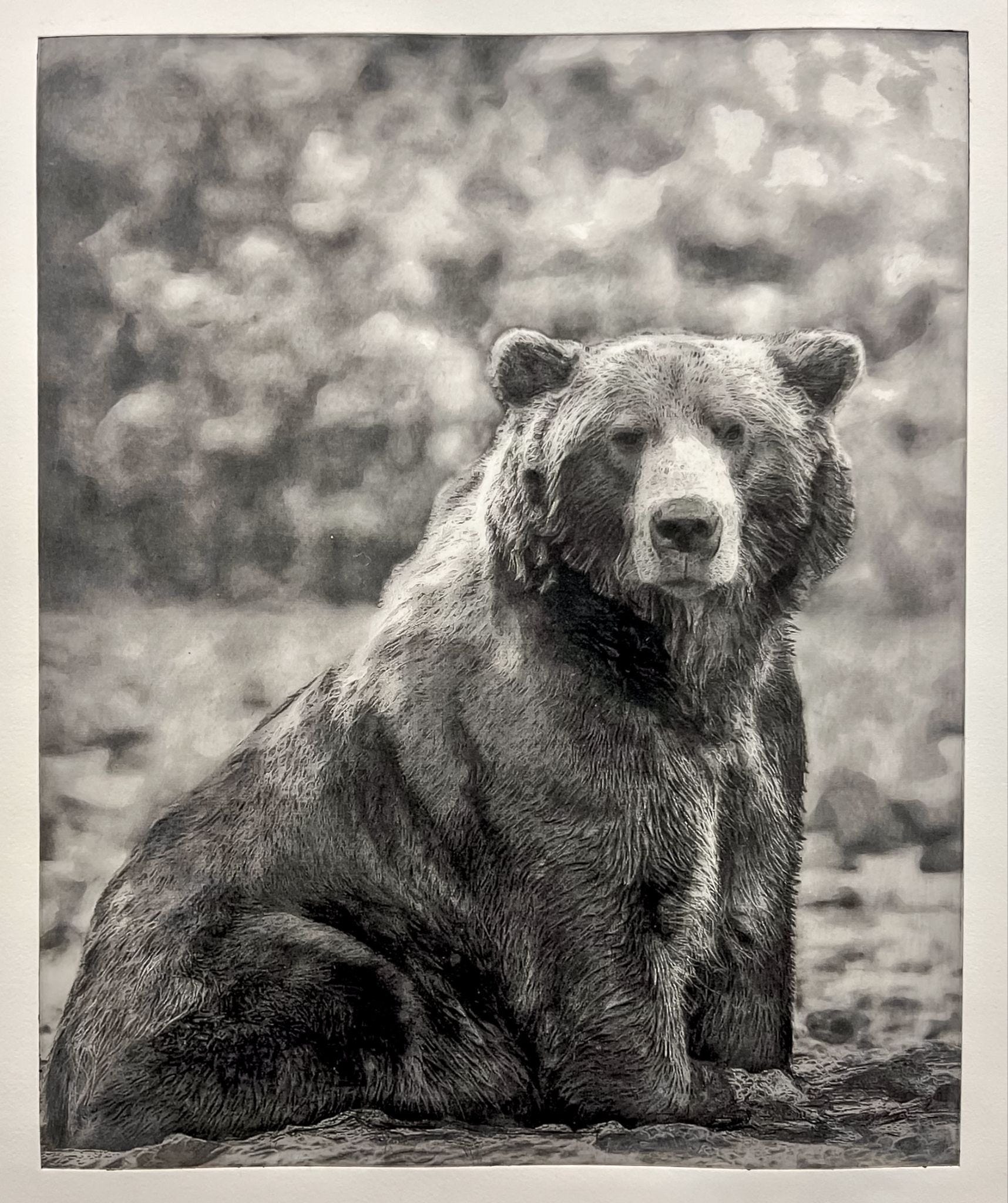
A Pause in the Action, Photogravure, 8” x 10
Ralph’s upcoming classes at Shepherd & Maudlseigh Studio:
Photogravure I: From Photo to Etching
October 13th & 14th, 10AM - 3PM
Photogravure II: Developing Your Practice
November 14th & 15th, 10AM - 3PM