
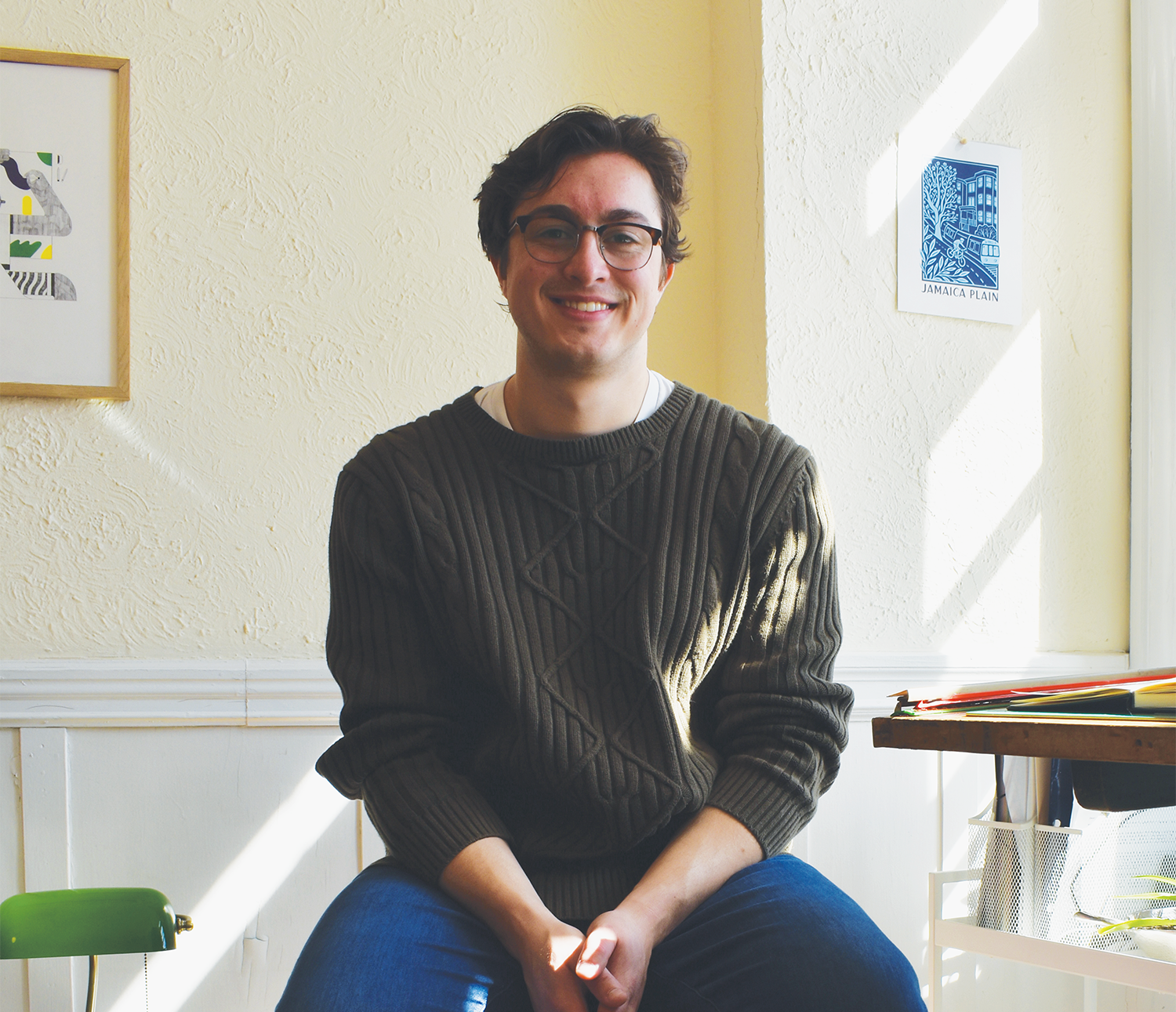
Rohan McDonald
Hello friends!
For this fifth issue of Print + Book Report, I’m delighted to speak with print and bookmaker, Rohan McDonald. Rohan's risograph animations have an organic energy that feels unlikely for work rooted in a digital pipeline, each flickering loop the product of intention meeting a machine with its own logic and mood. A director, animator, and illustrator based in Boston, McDonald moves between commercial work for clients like Google and HBO and a quieter personal practice centered on ink, paper, and community. At &RISO, his risograph program at Shepherd & Maudsleigh studio in Newton, he runs one of only two publicly accessible RISO machines in Massachusetts, a refurbished unit he shipped up from a copier depot in Florida. This conversation traces the through-line connecting all of it: the hand-drawn mark, the happy accident, and what happens when animation and printmaking collide.
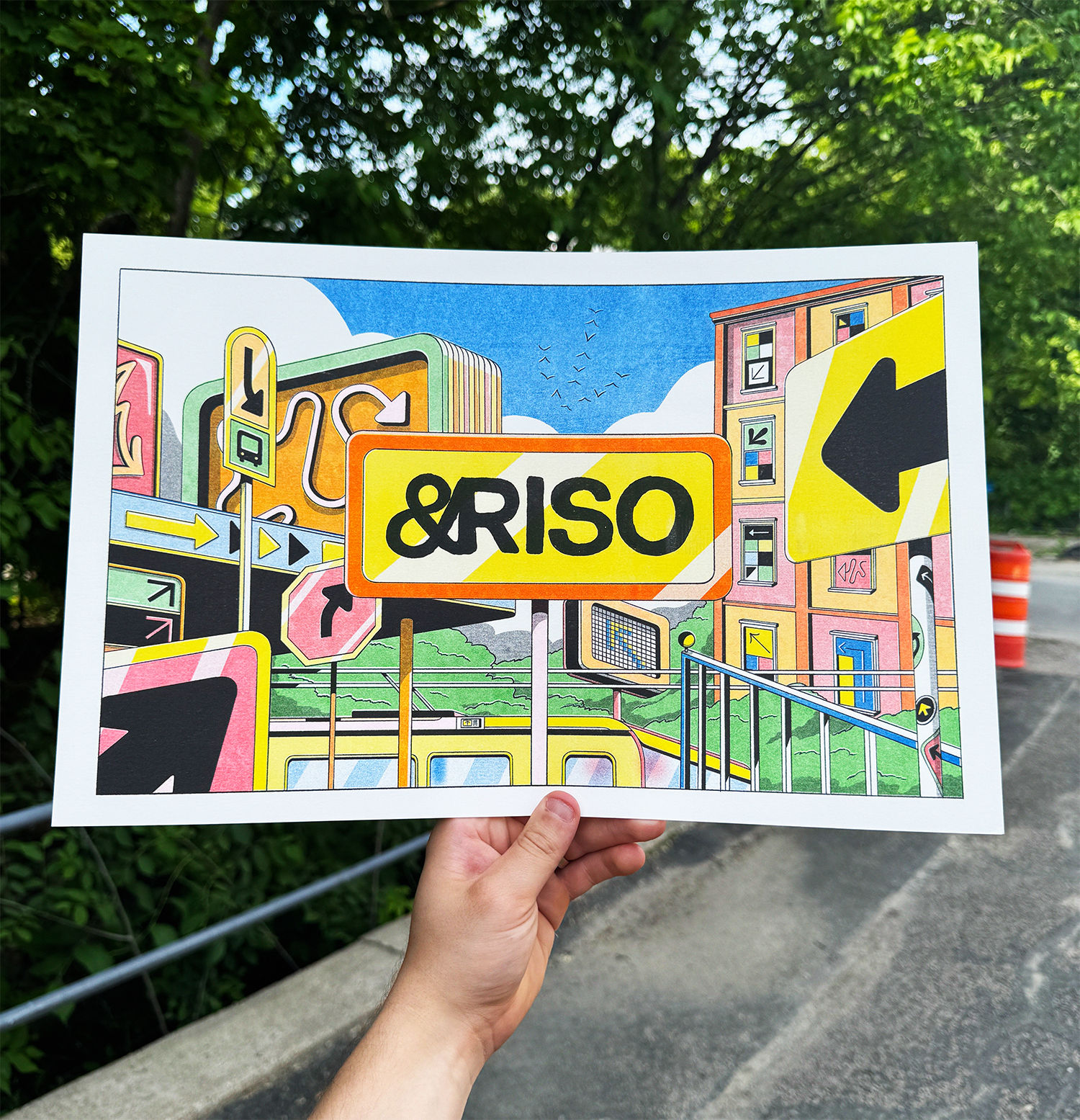
&RISO Poster | 6-color Risograph print made for the &RISO studio space.
Leah: When did you first encounter a Risograph (RISO) printing machine? What about that first experience hooked you for future experimentation?
Rohan: I first encountered a Risograph machine during my sophomore year at the school of the Art Institute of Chicago (SAIC) in a bookmaking/printmaking class. The speed of the process caught me off guard and I felt overwhelmed with ideas for potential projects. The machine mixes the cooking-like process of printmaking with the immediacy of a xerox machine. I’m quite impatient as an artist sometimes, so this machine accommodates that and lets me experiment quickly.
Leah: Your primary practice is animation and illustration, work that lives on screen. What draws you also to something as physical and unpredictable as the Risograph?
Rohan: As I’ve grown in my career, work on a screen has felt less rewarding or impactful in some ways. Perhaps it’s the innate connection between our phones/computers and algorithmic commerce, or the physical toll that looking at a screen takes from the eyes and brain. Printmaking is tangible and it’s the digital artist’s way to “get their hands dirty.”
When I’m making a risograph print, or printing out an animated sequence on my laser printer and scanning it back in, I’m capturing a moment in time. I’m recording when the RISO ink drum hits the paper and the clarity of the master (or stencil), while baking those moments into a moving image. I think my feelings are similar to how many filmmakers feel about film vs. digital pictures.
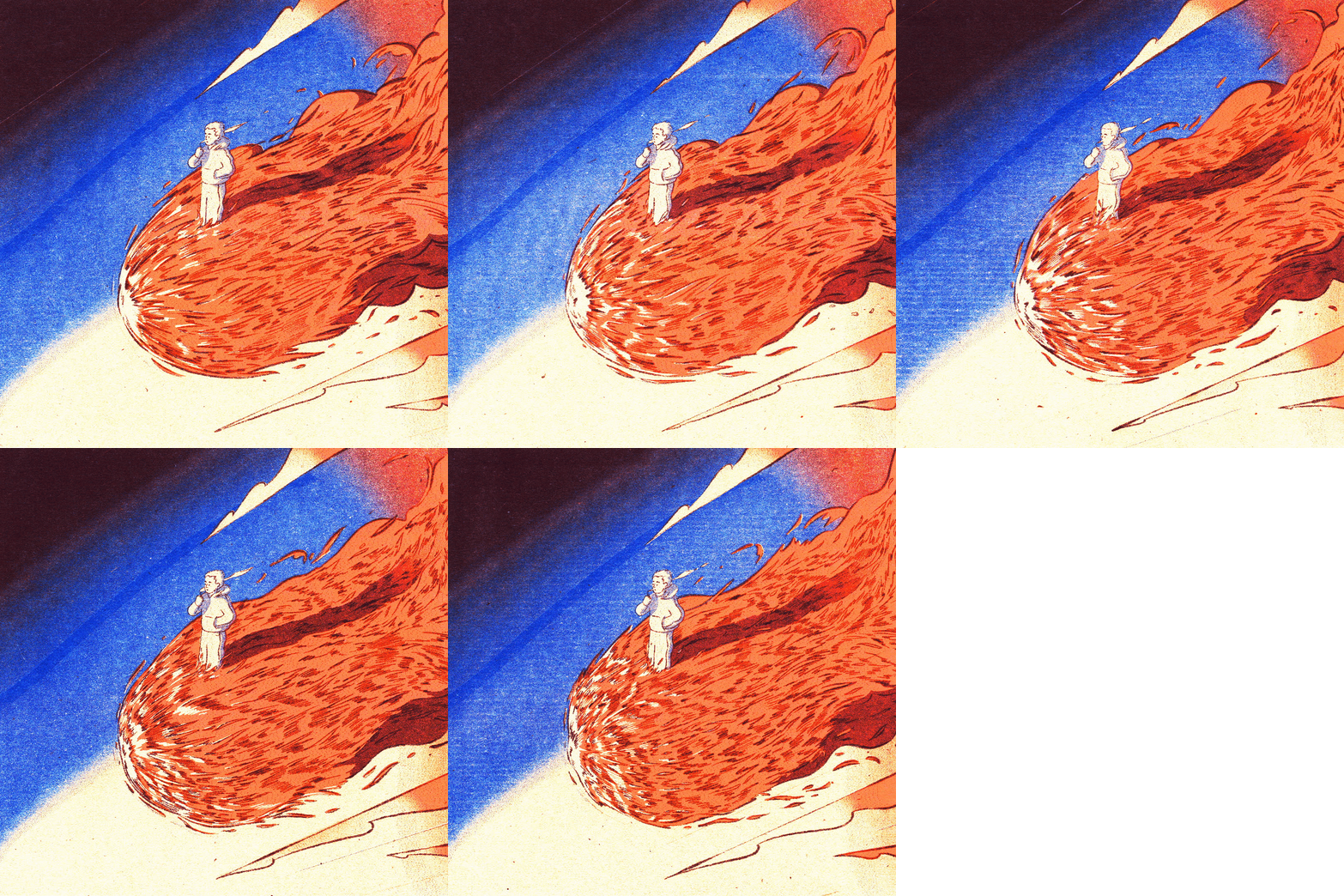
Comet | 4-color Risograph printed loop.
Leah: You were born in Switzerland, went to school in Chicago, and are now based in Boston. How has moving between these places shaped the way you work or what you make if it has?
Rohan: I’m heavily influenced by the architecture and nature in a city. I was quickly brought to Boston after being born in Switzerland and grew up on the Tufts University campus (my father was a professor of Music). I was immersed in academia and I took advantage of opportunities to learn music, go to arts and theater camp during the summers, and embrace the greenery that Tufts used to take care of.
When I was at SAIC in Chicago, I grew as a person and an artist. I was by myself in the center of the city, surrounded by beautifully conceptual architecture that influenced art movements like Chicago imagism and the prairie school of Architectural design. I looked inward and investigated new ways to use my drawing skills and did my best to fail dramatically.
Moving between these places showed me the multitude of possibilities available to an artist in a city. There are communities to be found and visual experiments to pursue if you have the energy and awareness to try. Coming back to Boston has pushed me to re-contextualize my childhood environment and to find more artistic community, in addition to making my work more introspective, sometimes to my own detriment.
Leah: What delights you most about working in RISO these days?
Rohan: The immediacy, the overprinting, and unexpectedly, the technical side of things. I’ve never been much of a tech wizard or mechanic, but if I want the RISO to run properly, I have to learn how to understand its noises and speak its language. I love getting to know this particular machine, and using it to establish some creative limitations.
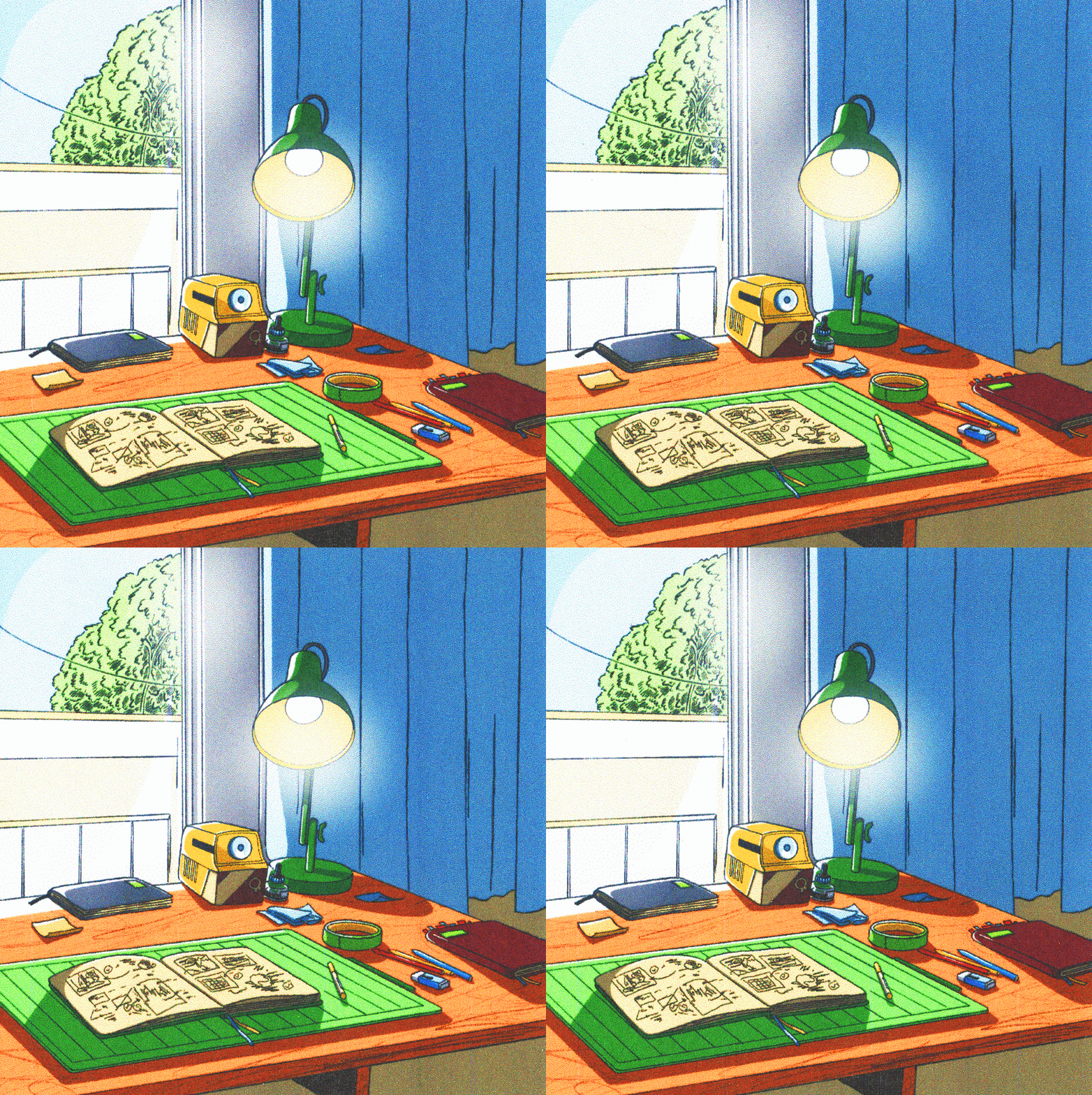
Desk | Laser printed loop
Leah: RISO printing is known for its unpredictability, ink that bleeds, colors that don’t quite land where you planned, registration that drifts. Do you work with that or against it?
Rohan: My approach changes depending on the visual characteristics of the image I’m printing, where that image will live after printing, and the experience I want to have.
Overall, I plan for mistakes to happen, ensuring that the main idea in the image will still be conveyed even if there’s a slight imperfection baked in. For many people, the imperfection is the reason to use RISO.
Leah: You’ve said your solution to the creative block is to sketch with no pressure on the outcome. How might that approach translate when you’re working with a machine that has its own logic and limitations?
Rohan: With the RISO, you can print collages, photographs, drawings, and anything you can scan. While I generally start a project by drawing, collage is a great way to bypass overthinking and react to what the printer produces, rather than using the RISO for a precise replica of a digital image.
Leah: You’ve described RISO as “instant gratification printmaking” that anyone can do with a little help. Who do you find is most drawn to your workshops. seasoned printmakers or total beginners?
Rohan: There’s usually an even mix of both. I think seasoned printmakers are always looking for ways to develop their practice further. And some are also looking for less laborious processes.
Beginners are drawn to the speed of the process and the vibrant look of RISO prints. I think it’s a great entry point to art making in general, as there’s no skill based barrier to making an image.
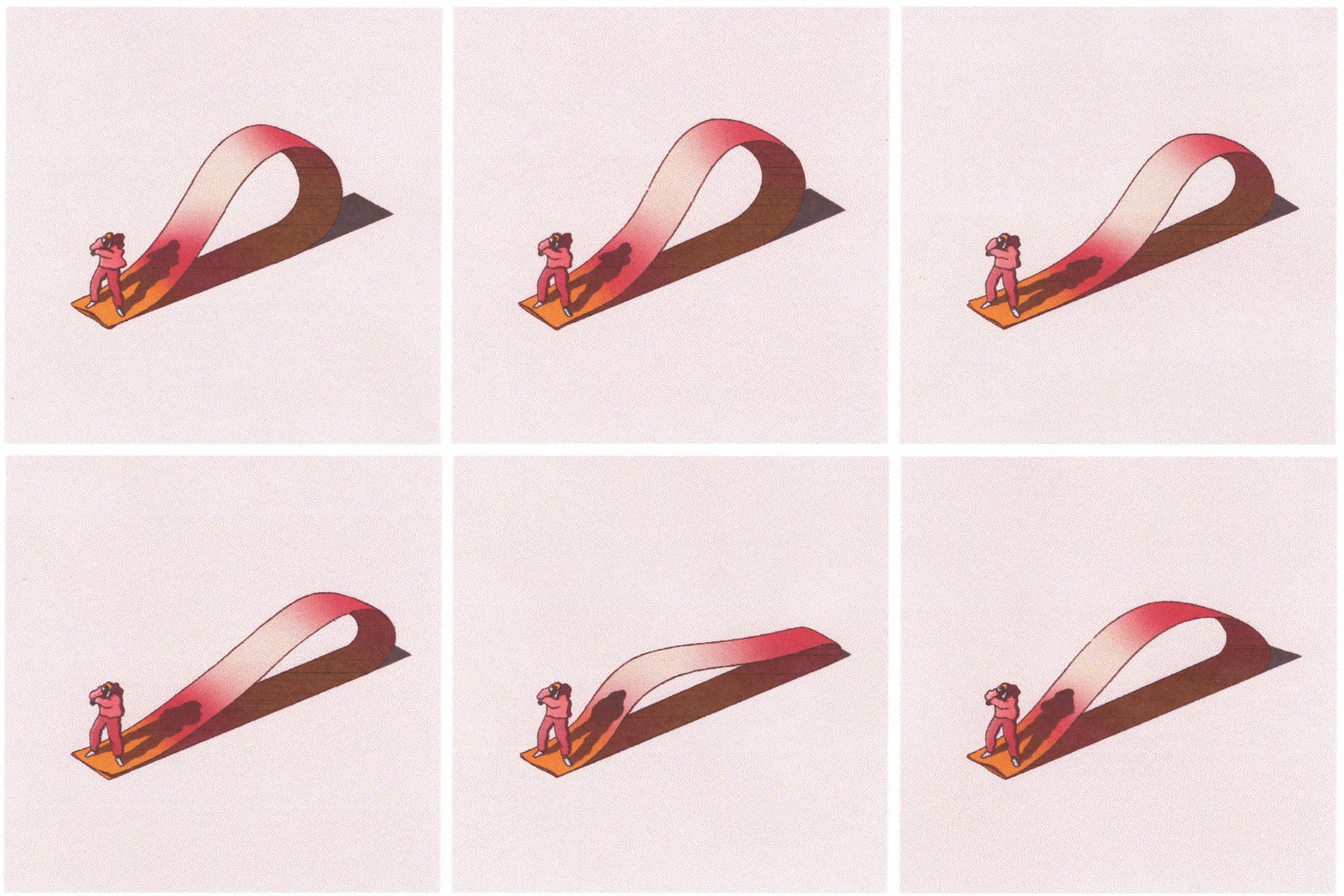
Windy Man | Laser printed loop.
Leah: One of your workshops, “Paper Jam,” brought together RISO printing and bookbinding with book arts teacher Rebekah Lord Gardiner. How do you see those two worlds talking to each other?
Rohan: Risograph printing and publishing go hand in hand. Since the printer hit the US market in the 80s, it’s been co-opted by the punk scene for gig posters and zines, and nunneries using it to distribute Christian literature and church brochures.
“Paperjam” is a class that interacts with the Risograph’s history as a publishing tool. During the class I attempt to communicate the immediate creative potential of the machine while Rebekah brings in her refined craft expertise. The ability to have students iterate and experiment with printed imagery while learning unique book structures is what makes this workshop so special.
Leah: Is it true that most RISO machines are generally not publicly available? Is that mostly because of the high cost of the machines? What does it mean to you to make this technology available to the broader arts community?
Rohan: When I left Chicago, I lost in-person access to a multitude of RISO studios and local presses. While Boston has a flourishing academic scene and a wealth of creative people, tools and spaces are made inaccessible by the high cost of living and the wealthy being catered to over the middle and working classes. As a result, tools like the Risograph are often gatekept at universities. Ironically, the American RISO headquarters is in Woburn, MA, but Shepherd & Maudsleigh houses 1 of 2 publically accessible Risograph machines.
Buying a new machine is upwards of $15k if you’re trying to buy in Boston. I bought our refurbished machine from “copier depot” in Florida. The cost of the machine, shipping, and 3 ink drums was a fraction of the cost of a new machine.
I’m glad we’ve been able to make this machine accessible to artists in MA. It’s a small step in helping the New England arts scene become more equitable and open. I’m learning so much about how to interact with the larger arts community and it’s bringing me out of the creative isolation that freelancing can create. It means so much to add a new layer of collaboration and community to my life.
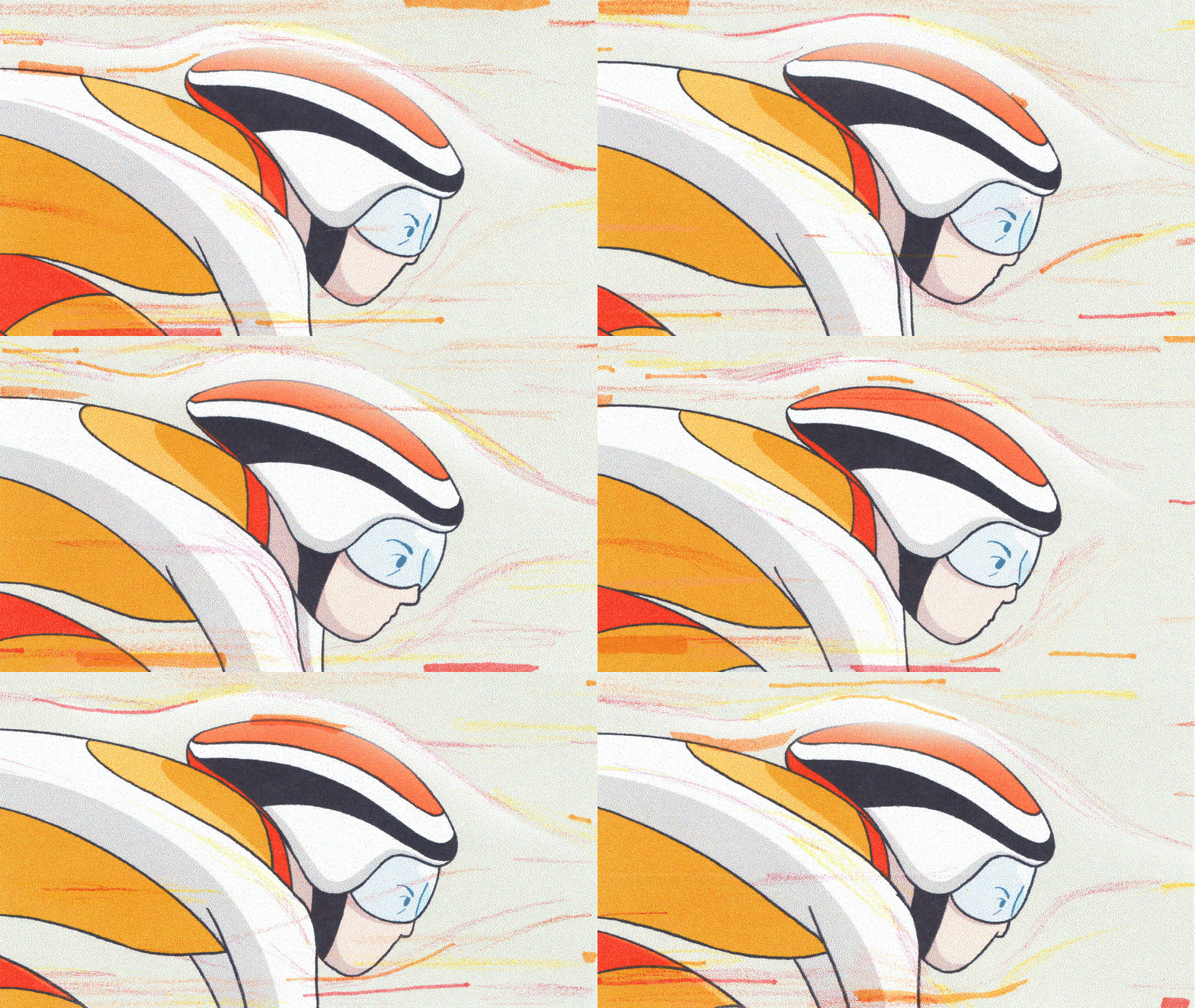
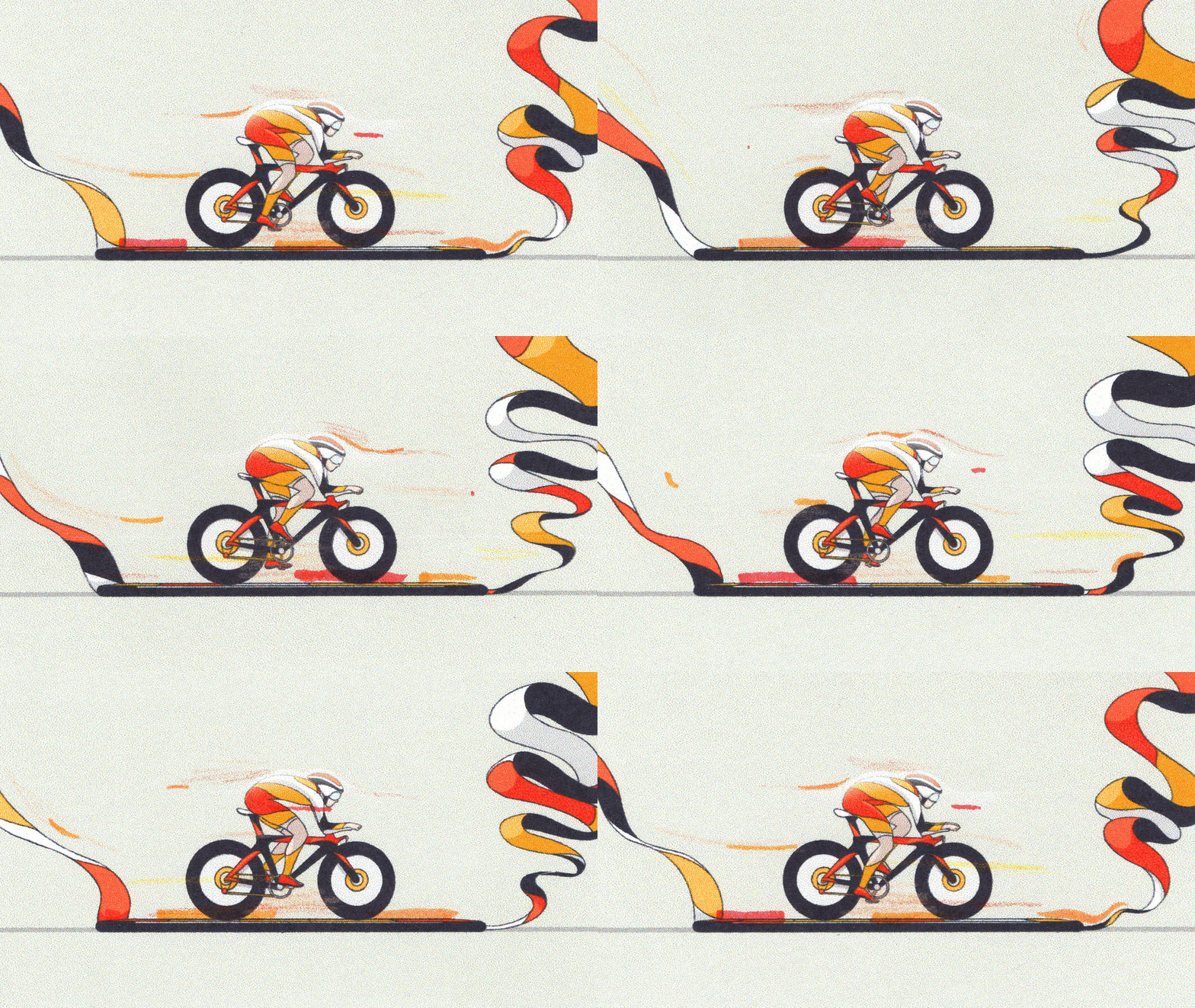
Very Fast Excerpts 01 + 02 | Laser printed excerpts from a very short film with color pencil additions.
Leah: How do you maintain analog quality in work that ultimately gets delivered digitally for your art and your commercial practice?
Rohan: It’s always a challenge to maintain a warm and analog feeling in commercial work. I’ve learned how to simulate an analog look in animation using a mix of software and effects, but it’s never fully there.
Maintaining that feeling is consistently challenging and I’m still learning how to bridge the gap between the analog and the digital.
Leah: Do you ever bring RISO into commercial projects, or does it stay in the personal and community side of your practice? Is there a separation you want to keep?
Rohan: I’ve brought laser printing and Risograph printing into a few professional projects and it’s always a unique challenge. You have to get solid approvals from the client at each stage and executing major edits after printing is very difficult.
I find that printing and mixing media is still more on the personal side of my practice. The organization and communication around a commercial printed project can take the improvisational fun out of the process.
Leah: You’ve said your favorite clients are ones who trust the creative process and are excited to collaborate and explore. What does that actually look like in practice?
Rohan: Clients who are excited to explore and collaborate rarely make decisions out of fear. Instead, they make decisions in service of their larger goal: wanting to make the best product possible.
This looks like giving feedback that is constructive and thoughtful, bringing visual references to the table, and ensuring that their communication is respectful even when miscommunications or obstacles present themselves.
Clients don’t have to know what they want, but we have to agree on the goal and pursue it together.
Leah: With RISO, you’re working in a medium associated with zines, DIY publishing, and grassroots distribution. How does that political and cultural history of the Risograph show up in what you make and teach?
Rohan: Accessing the conceptual history of RISO is often an antidote to the occasional monotony of client work. I’ve noticed after large stints on commercial projects I begin making decisions out of fear and the Risograph can help me get out of that mindset.
Not every RISO print must be sold and not every book has to be published on a large scale, I learn more with every print and I try to remind myself that that is enough.
In workshops I try to convey the political associations of the medium, ensuring students understand the vast impact of the medium regardless if it’s largely understood in popular culture.
Books are an especially experimental medium that creates an experience. They can be theatrical and abstract, challenging what art and traditional entertainment can be. This is important in an increasingly homogenous environment of popular media.
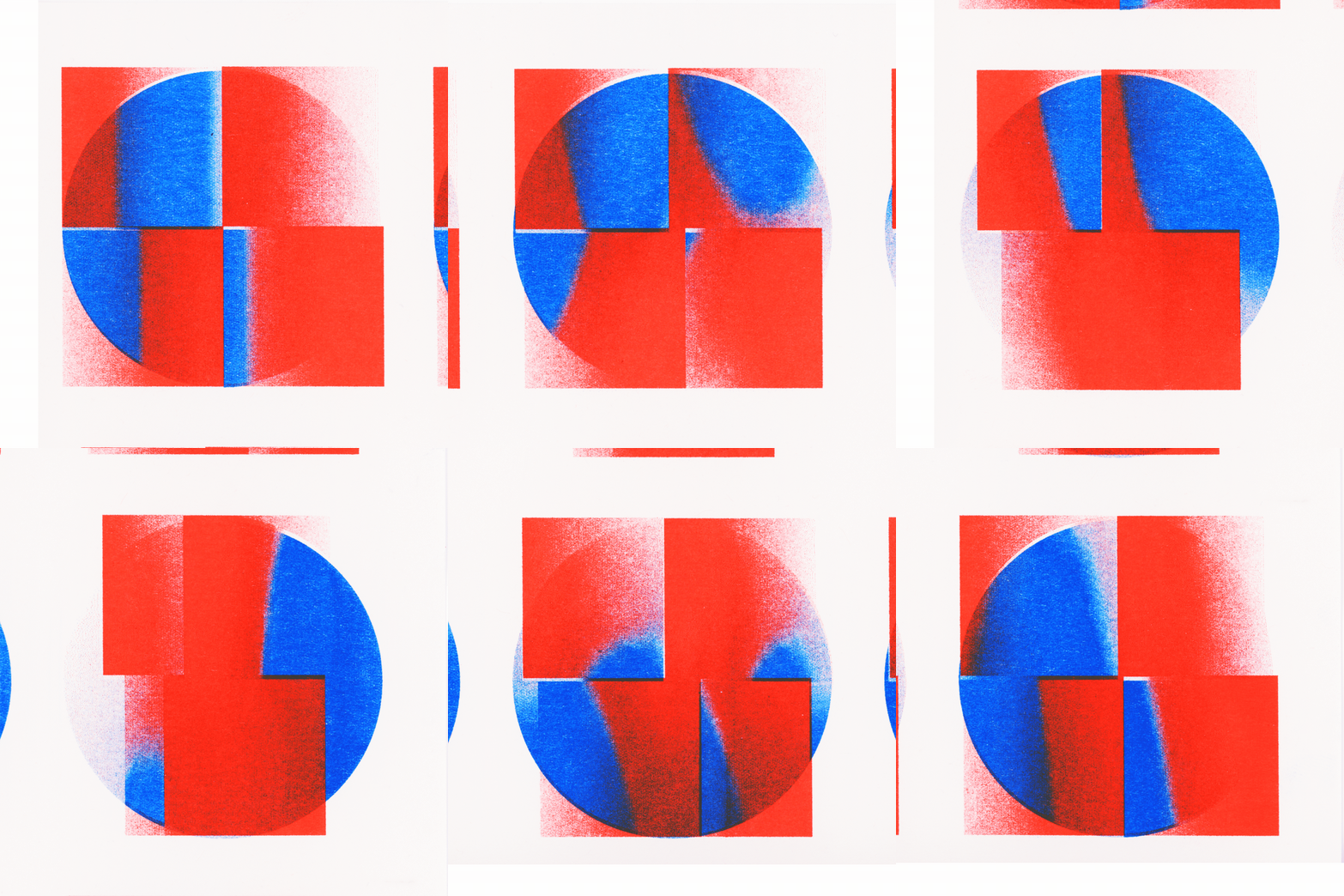
Circles + Squares | 2-color Risograph printed Loop made as an example for the "Animating on the Risograph" workshop
Leah: You have workshops planned on animating with the RISO, a convergence of your two main practices. What does time look like in that process? What does the machine add to animation?
Rohan: Animating on the Risograph has been my favorite workshop to teach. It’s the culmination of years of conceptual thinking around publishing and moving image. I feel to communicate my passion, expertise, and enthusiasm for both printmaking and animation.
The machine adds texture and vibrance to animation. Each frame is a moment in time captured and sequenced. The animation of riso texture feels like the crackling of a fire or a vinyl record. And it’s even more rewarding because of the time, thought, and labor put into the animation and the printing.
Leah: What print or project has surprised you most, something that came out of the machine different from what you expected, and ended up being more interesting for it?
Leah: What has surprised me the most is how very few images are needed to create a detailed animation. “Comet,” a Risograph animated loop that I made, is just 5 frames, yet it feels larger than life. The colors were distorted and the fluorescent qualities of the ink added even more vibrance to each layer of the sequence. That’s what I’m looking for when combining animation and printmaking: the colliding of my intention with the machine’s response.
Rohan has several upcoming workshops at Shepherd & Maudsleigh. Click here for more information.